
The World Cup Like You’ve Seen it Before

Film Title: “Hero: The Official Film of the 1986 FIFA World Cup”
Dir: Tony Maylam
Release Date: 2 July 1987
Review by Antony Cirocco
Diego Armando Maradonna, the hero of our story, takes centre stage in this feature-length documentary. The film is worth another look. Yes, the 1986 World Cup was 40 years ago, but this was the golden age for the World Cup, where the mystery, the spectacle, the drama and the passion all collided into one of the most memorable World Cup events in history, set in the backdrop of the poverty and devastation of the Mexican earthquake recovery. This is a fine example of an early Sports Documentary narrated by Sir Michael Caine himself, star of the classic Football movie “Escape to Victory”, which was made in 1981.

The film starts with drama and tragedy off the pitch with footage of the Earthquake that struck Mexico City 8 months before the World Cup finals in 1986. It’s not pretty, not polished, it’s honest. It’s an honesty that is now tainted with bribery and corruption rumours today. Back in 1986 the World Cup symbolised the hopes and aspirations of young footballers, of the fans and the world. Maylam treats the players, the game and the audiences with the utmost respect in this dramatic documentary about the finals of the Mexico 1986, and it shows, it’s a great sports documentary, worth watching now, even if it is to contrast where the sport was and where it's now. Today, modern football is a corporate juggernaut, riddled with massive egos, player celebrity and dripping with money and glamour.

This film was commissioned by FIFA (Fédération Internationale de Football Association) in French. In English, it stands for "International Federation of Association Football". For the uninitiated, FIFA is the governing body of world football. FIFA Commission a factual documentary for every World Cup. Whilst Maylam didn’t have access to the broadcast footage rights here, there is plenty of coverage from the sideline, by an army of Camera Operators and assistants wielding 35mm and 16 mm cameras.
This is not an archival film; it was shot in 1986 and released the following year for all the fans around the world, who couldn’t get to Mexico or didn’t have access to a television and were listening on the radio at the time of the game. They could, albeit a year on, pop down to the local theatre and watch this documentary of the World Cup and relive the action and the emotion. I remember my club taking my team to a free screening of this documentary in 1987-88. It was exciting and engaging, it was a free trip to a cinema, and it featured all the greats like Francescoli, Platini, Lineker, Laudrup, and the brilliance of one of Brazil’s finest midfielders, Sócrates.
There is one player, however, who makes this documentary, this 1986 World Cup, different. A player who has gone down in history as the greatest player of all time…Diego Armando Maradona. At his peak, he was unstoppable, and this documentary captures his effortless twists and turns in all his glory. It’s a true highlight of this documentary to watch Maradona play at a level that has not really been seen at a World Cup since. In the words of Gary Lineker, England Striker at the time, “we tried man-on-man marking and zonal marking against him (Maradona), nothing worked…”.

The narrator, Michael Caine, captures it beautifully: “Football is the world’s most popular professional sport, the game of the people, to win the World Cup is the pinnacle, the ultimate accolade. Occasionally, one player rises above the rest in Mexico; that player would be Diego Maradona, the captain of Argentina."
The absence of broadcast footage here, one might think, would be a hindrance, but this has indeed provided opportunities; here is where the aggressive world of mid-80s football meets modern synthesisers and slow-motion montages to make poetry in the madness of toe-to-toe world-class football.

The result is an odd but intriguing emotional rendition of football that is mesmerising and at the same time, a bit quirky. The Composer Rick Wakeman was no hack; he also worked with David Bowie, and earlier, “The Burning” a Horror Film produced by Harvey Weinstein also directed by Maylam. He also produced the soundtrack for “G'olé!”, the FIFA documentary for the previous World Cup. The soundtrack doesn’t loop or repeat; Wakeman scored the entire film with original compositions, bespoke to the cut as it should be. No droning synthesisers here, the music has motivation and purpose. At times, the film score is inspired by another great synthesiser film score from the movie “Electric Dreams” released three years earlier. There is a hint of “Chariots of Fire”, 1981, in there also.
Yes, this is a sports documentary, commissioned by the sports governing body FIFA, but it is, in every part, an observational documentary. Made to the high standards without the lengthy talking head interviews. The voiceover by then legendary and still to this day legendary, Michael Caine is calm and reflective, without emotion or opinion, he summarises the narrative, it’s not driven or exaggerated by his moderate tone. His voice-over tightly stitches the graphics together, making sense of the visual mayhem.
The footage, much of it in 35mm is dynamic, wild and emotional, not like watching polished mechanical coverage of modern football games that feature scene coverage with all the predictability of a television studio production line. The camera work here has movement, has polish and it has style.
There is observational footage of the crowds of people, of the players expressing themselves emotionally. The fans are willing on the players, and the players are fighting for every inch of territory on the pitch.
This film is beautifully analogue, it’s cinematic, all shot on film, it’s fluid, vision is thanks to the now redundant analogue filming and editing process that enables a connection to the footage and the faces of the people. It’s organic, grainy, believable and remarkably in focus.
There is slow-motion footage used to create emotional resonance, and at times, the football scenes are cut like music videos. Telephoto lenses give the viewer an audience member's perspective, in close up, and the 35mm film gives us all the detail we could want and need. There is a beautiful montage of Diego Maradona to end the film, cut to a song that provides the viewer with a snapshot of the man, before the mafia and party drugs took hold.
Motivational synthesiser, at least modern at the time, but now reserved for regional local government training videos, adds another layer of vapour wave plastic mid-80s texture.. Unfortunately, the codec used by SBS on Demand looks like they download the video illegally and then filmed it from someone’s home projector before uploading it. I am sure they could have done better. The resolution was so bad, I jumped over to YouTube to watch the same version of the film in full HD. Much of the footage in this documentary was shot on 35mm film, and the SBS on Demand version does not do the camerawork any justice whatsoever. Mind you, watching on the official FIFA channel means you are staring at the FIFATV watermark for an hour and a half. Swings and roundabouts.
Interestingly, this film has something that factual representations of modern football don’t, it’s got soul, emotion and feeling. However, much of that is produced with a stylisation treatment process, i.e., the synth music, the focus on emotions, not facts and the use of slow motion, but at its heart, this film was made for everyone, families included, and this justifies the visual and audio treatment. Politically speaking, it’s classless, that is, it represents the fans as happy, willing participants, not a spectacle to look down on. The camera often looks up at the audience and is not trying to pick out celebrities and royalty in the crowd. Likewise, there is not a manager or politician in sight; it’s about the players and the supporters…and that’s it.
Modern factual representations focus on the management, the contracts, the finances, and the trading of players like commodities. There is none of that here, and contemporary representations of factual sport could learn a lesson here about focusing on the people that matter in sport.
This film was made when football was “The World Game”, and “The People’s Game”; this has all changed now, and it's this lack of connection to everyday audiences is at the heart of what has pushed audiences away. That and the ticket prices.
This documentary excels in the use of observational footage to connect the audience to the people and the action of events. All shot in high-quality 35mm and 16 mm film, this film is visually rich, emotional, poetic and dynamic.
At times, too much of the diegetic sound has been stripped out, leaving the sound mix empty and the resulting experience at times feeling overtly stylised.
The legacy of this film is the reason to watch it again or to watch it for the first time. This is an early sports documentary that appealed to everyday folk across borders and across politics. It captures the heart and the essence of the fervor for the World Cup and all the excitement it brings in the contrast of a Mexico City in ruins after the earthquake of Sept 1985.
This film is an excellent trip down memory lane for football fans everywhere. If you are a Generation X’er like me, memories will flood back. If you are you and you want a quick review of the history of modern football, you will be entertained and informed by this documentary.
The music, Michael Caine’s voice-over and the slow-motion footage of Maradonna, laying waste to the best defences in the world, are the highlights.
3 out of 5 stars
Review by Antony Cirocco
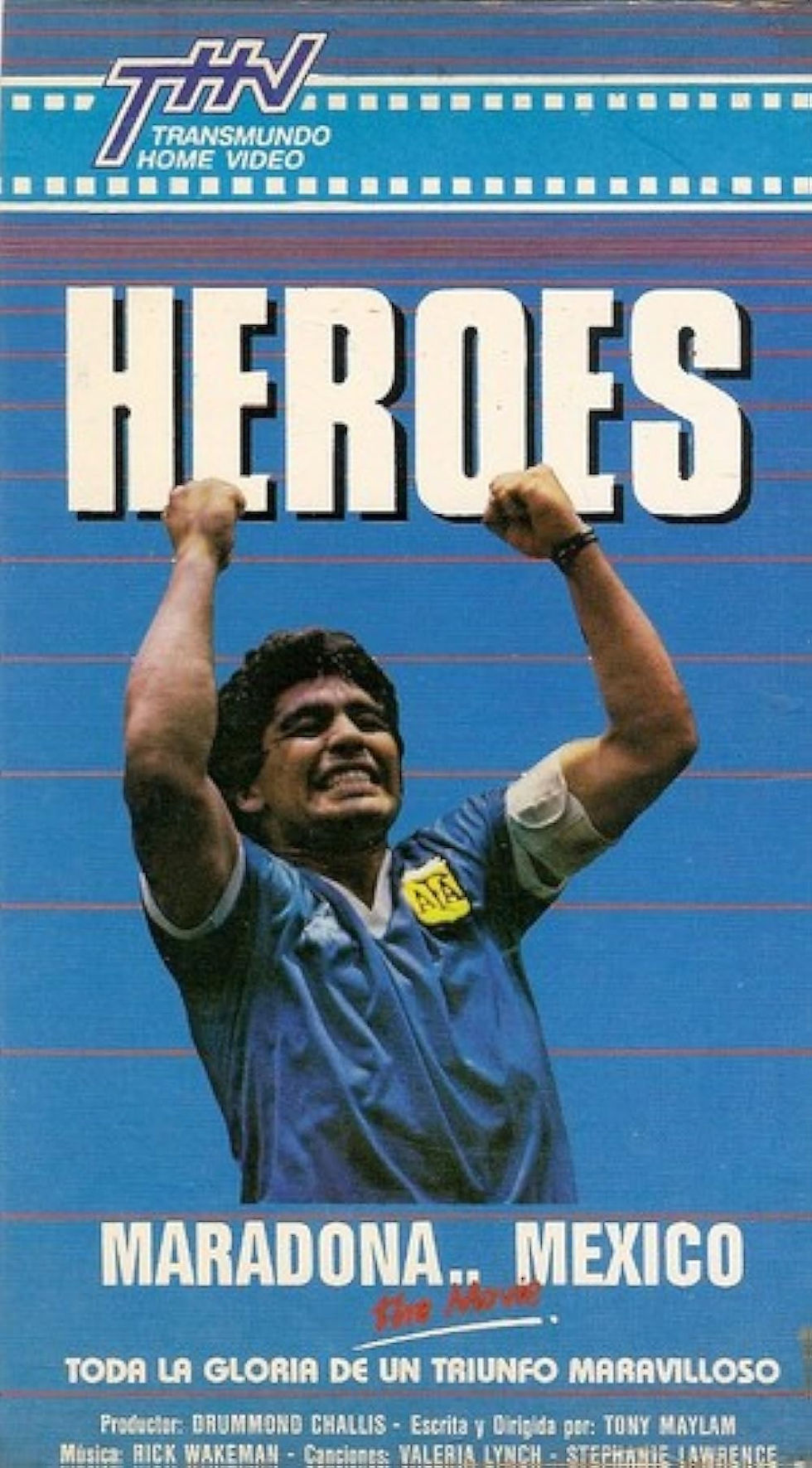
Check out the full-length feature film on YouTube here - https://www.youtube.com/watch?v=3eDZV-p9DiI


Comments